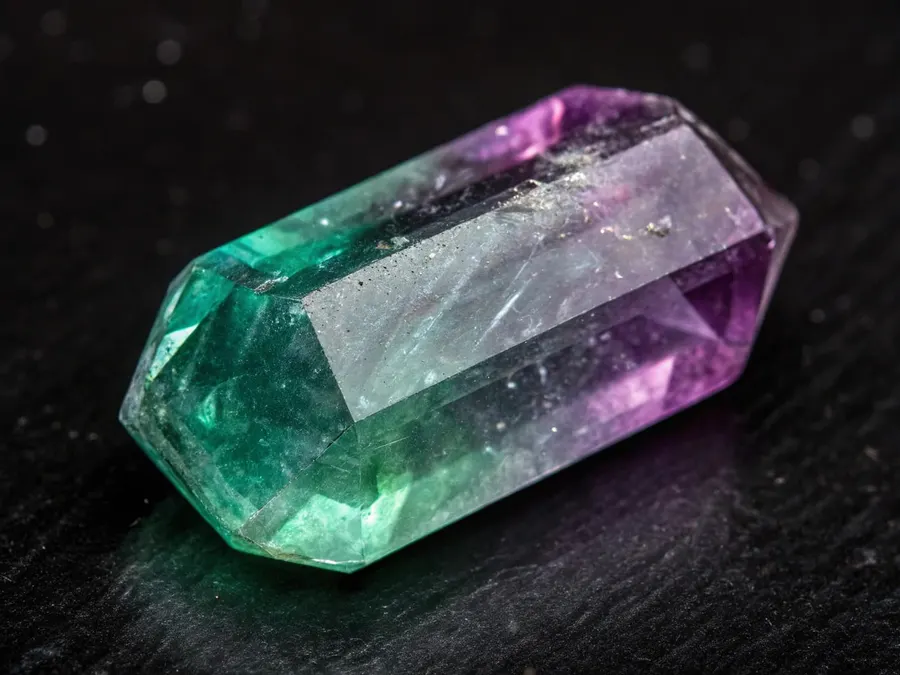
Alexandrite is associated with transformation, balance, luck and self-discipline in witchcraft.
What Alexandrite symbolizes
Alexandrite symbolizes duality and balance, reflecting its color change properties. It is associated with aligning the physical and spiritual realms, helping the user navigate life's transitions with grace.
How witches use Alexandrite
- Enhancing intuition and psychic abilities
- Supporting transformation and adaptability in life changes
3 more alexandrite uses, best practices and step-by-step rituals are in the Wicca app.
Appearance & origins
Alexandrite is a rare and highly prized crystal known for its remarkable color-changing properties. Under natural daylight, it often appears green to bluish-green, while under incandescent light, it shifts to a reddish or purplish hue. The crystal is typically translucent to transparent with a vitreous luster. It is often cut into faceted gemstones or found in raw, irregular formations.
Alexandrite is primarily mined in Russia's Ural Mountains, where it was first discovered, as well as in Sri Lanka, Brazil, India, and Zimbabwe. Russian alexandrite is considered the most valuable due to its intense color change.
Associated deities
- Hermes
- Hecate
- Artemis
Folklore & history
Alexandrite was named after Russian Tsar Alexander II, as it was discovered on his birthday in 1830. It was considered a stone of good fortune and was believed to bring luck and protection to its owner. In Russian folklore, it is associated with the mystical ability to bridge the gap between the physical and spiritual worlds.
While alexandrite's discovery is relatively modern, its parent mineral, chrysoberyl, has been used historically for its protective and luck-enhancing properties. Alexandrite's rarity and unique properties quickly elevated it to a status symbol and an object of spiritual reverence.
Safety
Warnings: Alexandrite is considered non-toxic and safe to handle. However, it should not be used directly in water for elixirs to avoid potential contamination from impurities.
Care: Store alexandrite separately from harder stones to avoid scratches, as its hardness is 8.5 on the Mohs scale. Clean with a soft cloth and avoid harsh chemicals or ultrasonic cleaners to maintain its luster.