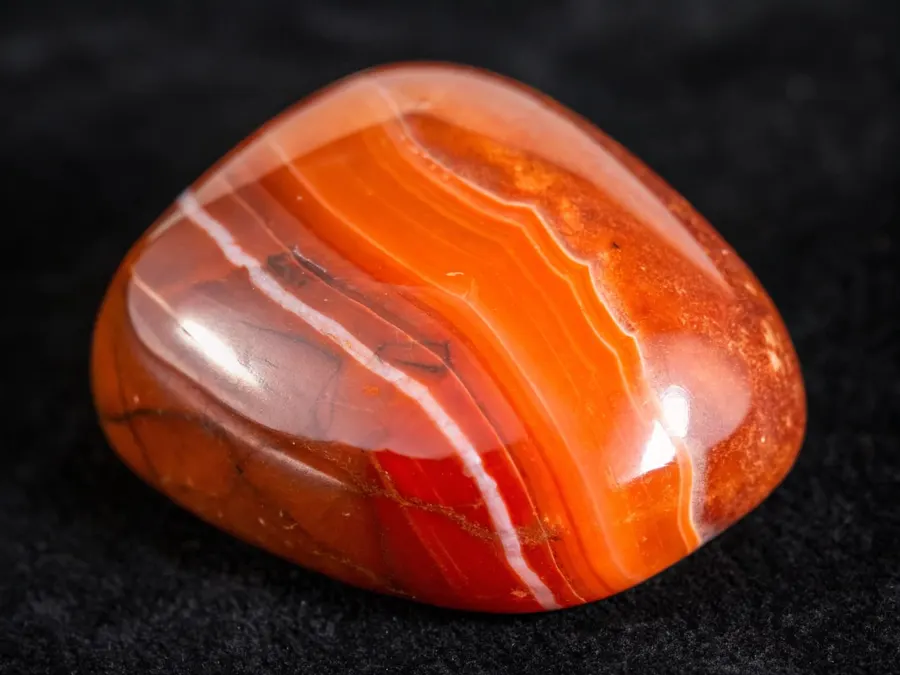
Carnelian is associated with vitality, creativity, courage and motivation in witchcraft.
What Carnelian symbolizes
Carnelian symbolizes passion, vitality, and the drive to overcome obstacles. It is often seen as a stone of action and empowerment, inspiring confidence and determination.
How witches use Carnelian
- Boosting confidence and courage in spells
- Enhancing creativity and inspiration
3 more carnelian uses, best practices and step-by-step rituals are in the Wicca app.
Appearance & origins
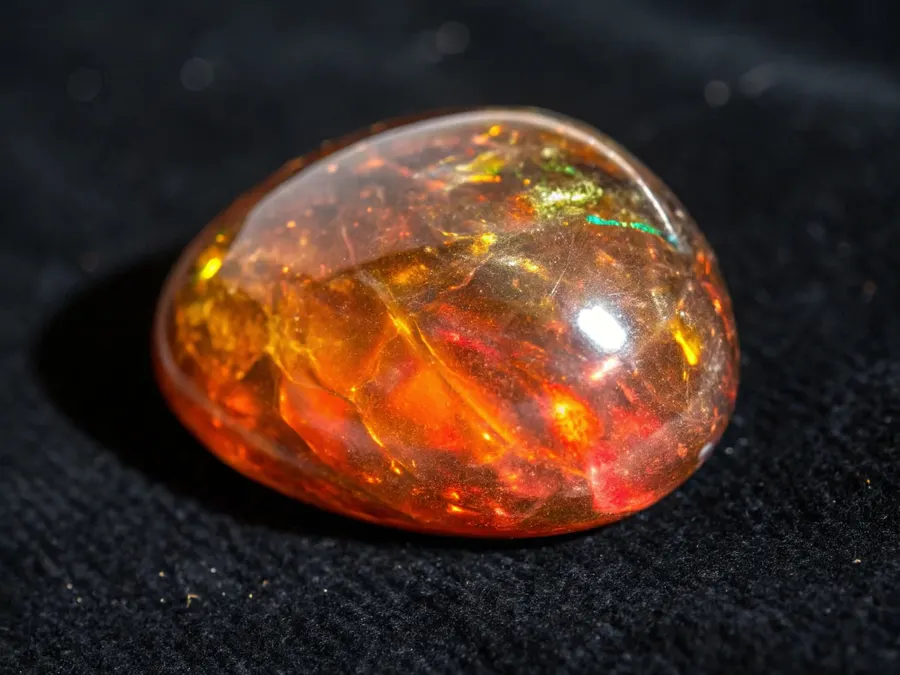
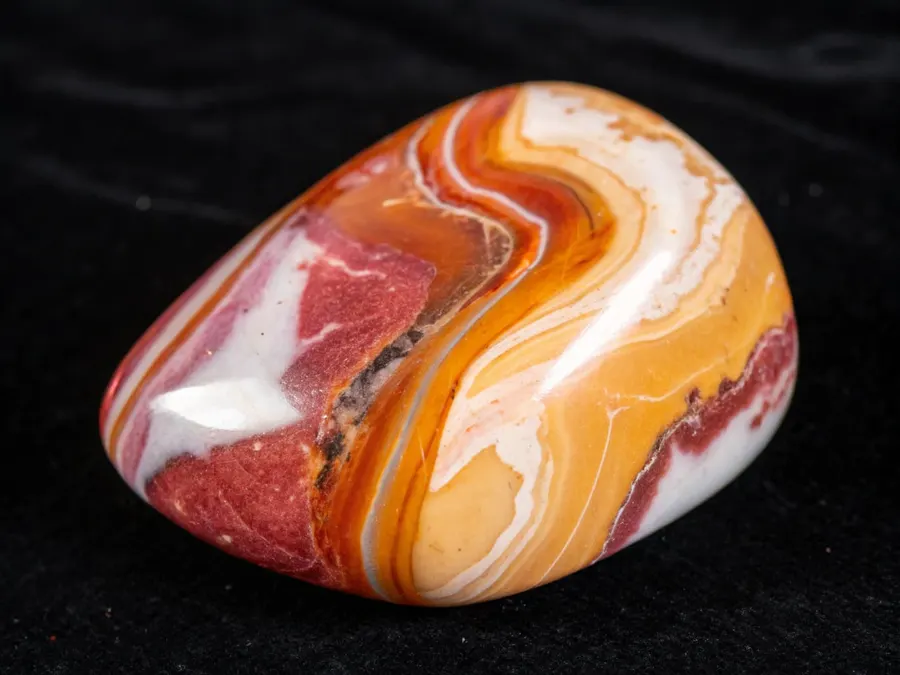
Carnelian is a translucent to opaque variety of chalcedony, a form of quartz. It typically displays a warm, fiery palette ranging from reddish-orange to deep brownish-red. Its surface is smooth and often polished to a glossy finish, with occasional natural banding or variations in color intensity.
Carnelian is commonly found in India, Brazil, Uruguay, and parts of the United States. Historically, it has been mined in regions of the Middle East and Egypt.
Associated deities
- Isis (Egyptian goddess of magic and fertility)
- Sekhmet (Egyptian goddess of war and healing)
- Ares (Greek god of war)
Folklore & history
In ancient Egypt, Carnelian was known as the 'Sunset Stone' and was believed to provide protection during the afterlife. It was often used in amulets and burial jewelry for this purpose.
Carnelian was highly prized in ancient Rome and Greece, where it was carved into signet rings and seals. It was also considered a stone of courage by warriors, who would carry it into battle.
Safety
Warnings: Carnelian is generally safe to handle and use. However, avoid using raw Carnelian to create crystal elixirs directly in water, as it may contain trace minerals that could leach into the liquid.
Care: Store Carnelian in a soft cloth or pouch to prevent scratches. Avoid prolonged exposure to direct sunlight, as this may cause its vibrant color to fade over time.