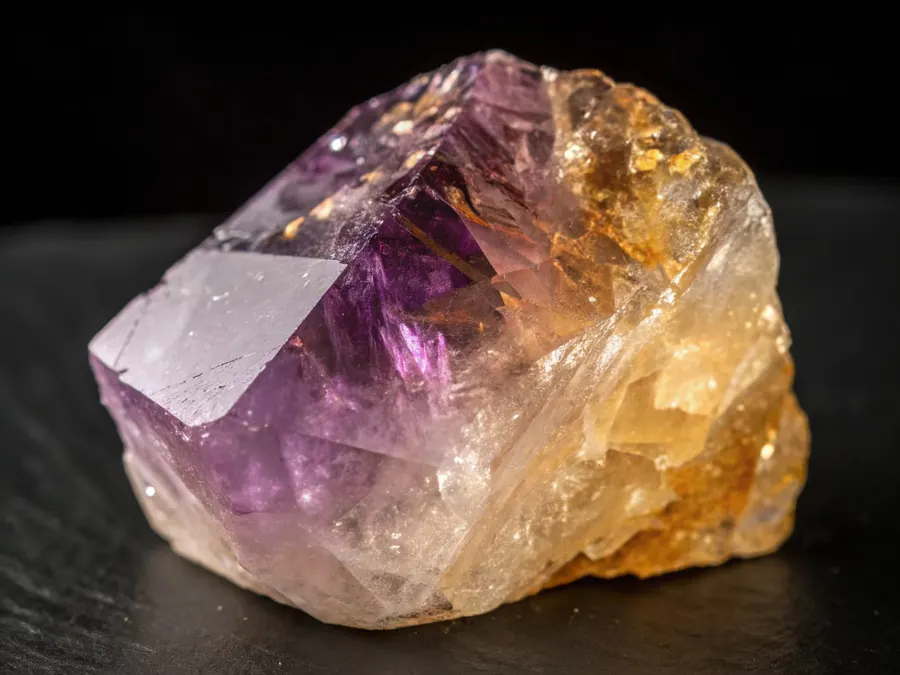
Ametrine is associated with balance, clarity, creativity and spiritual growth in witchcraft.
What Ametrine symbolizes
Ametrine symbolizes harmony and the integration of opposites, such as logic and intuition, or action and reflection. It represents the union of the physical and spiritual realms.
How witches use Ametrine
- Enhancing mental clarity and focus in spellwork
- Balancing opposing energies or intentions in rituals
3 more ametrine uses, best practices and step-by-step rituals are in the Wicca app.
Appearance & origins
Ametrine is a striking crystal that combines both amethyst (purple) and citrine (golden-yellow) hues within the same stone. The colors blend seamlessly or appear in distinct bands, creating a captivating two-tone effect. It is typically translucent and has a glassy, smooth texture when polished.
Ametrine is primarily mined in Bolivia, specifically from the Anahí Mine, which is the most famous source. Small deposits have also been reported in Brazil and India.
Associated deities
- Apollo (associated with clarity and the Sun)
- Hermes (associated with communication and balance)
Folklore & history
According to Bolivian legend, ametrine was discovered by a Spanish conquistador who received the crystal as a gift when he married a native princess named Anahí. The crystal was said to represent the union of their two cultures.
While not historically documented in ancient texts, ametrine’s components—amethyst and citrine—were widely used in ancient Greece and Rome for their protective and prosperity-bringing properties.
Safety
Warnings: Ametrine is non-toxic and safe to handle. However, it is not recommended to create elixirs by directly immersing the crystal in water due to potential impurities.
Care: Store ametrine in a soft cloth or padded case to avoid scratching its surface. Keep it away from prolonged exposure to direct sunlight, as this can fade its vibrant colors over time.